AI Blogging Software Comparison: How to Choose the Right Platform
Cut through the noise and evaluate AI blogging tools based on features, workflows, and long-term SEO impact.

Cut through the noise and evaluate AI blogging tools based on features, workflows, and long-term SEO impact.
Pranjal Jain
If you search for AI blogging software today, you’ll see dozens of tools promising “1-click SEO blogs” and “rank overnight.” Most of them gloss over the hard part: building a reliable, scalable content engine that actually drives organic traffic and revenue.
This comparison guide is designed to cut through that noise.
We’ll walk through how AI blogging platforms really differ, what features matter at the workflow and SEO level, and how to evaluate tools based on your team size, stack, and growth goals. By the end, you’ll have a practical checklist to pick the right platform for long-term search performance—not just quick drafts.
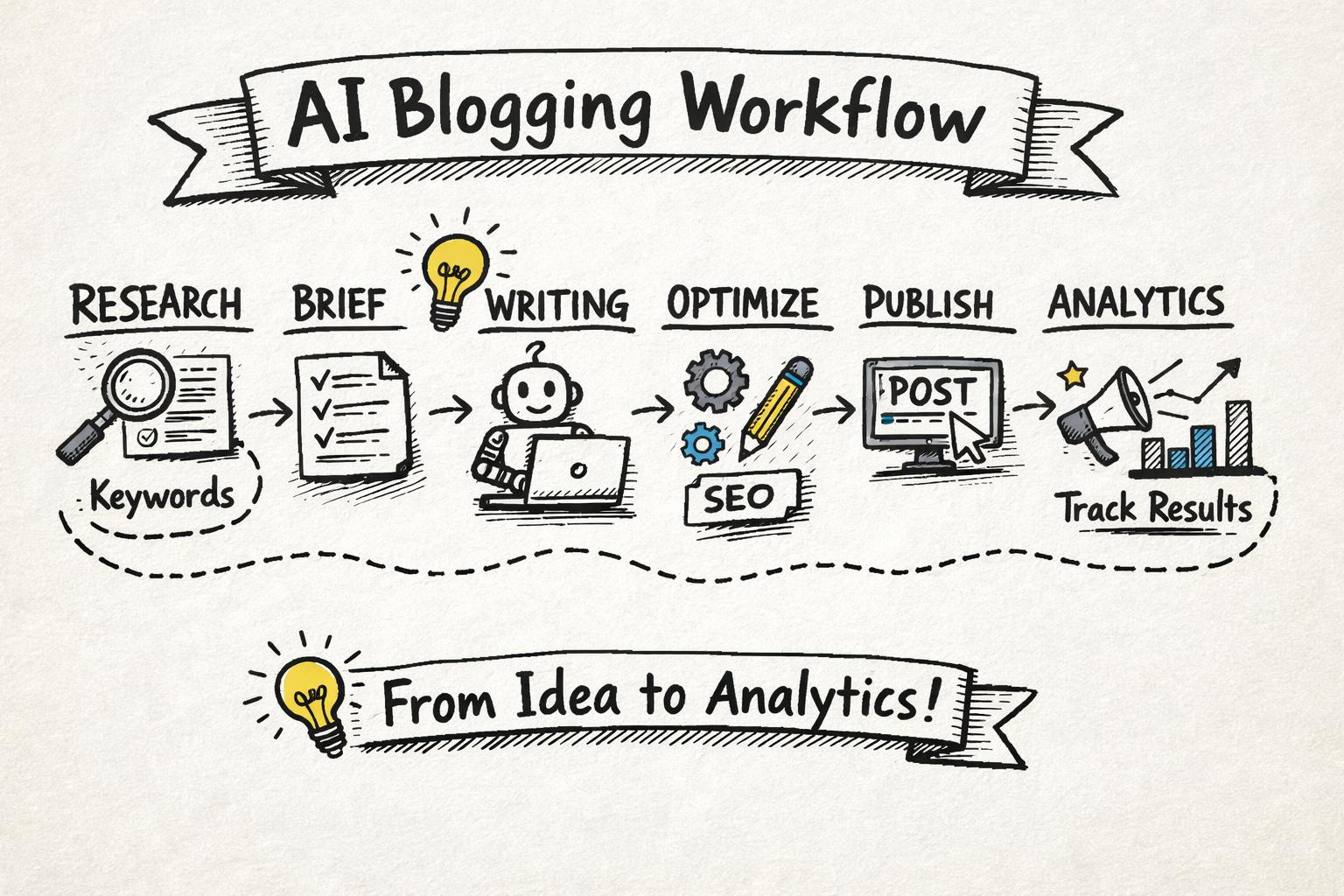
AI blogging software is more than a text generator. At its best, it’s a platform that supports the entire lifecycle of SEO content:
Researching and prioritizing keywords
Creating briefs and outlines
Generating and editing long-form content
Optimizing for on-page SEO and search intent
Publishing to your CMS and promoting content
Measuring performance and iterating
Many “AI blog tools” stop at the third bullet. They help you draft, but they don’t help you rank or scale. When comparing platforms, always ask: does this tool support my workflow or just my word count?
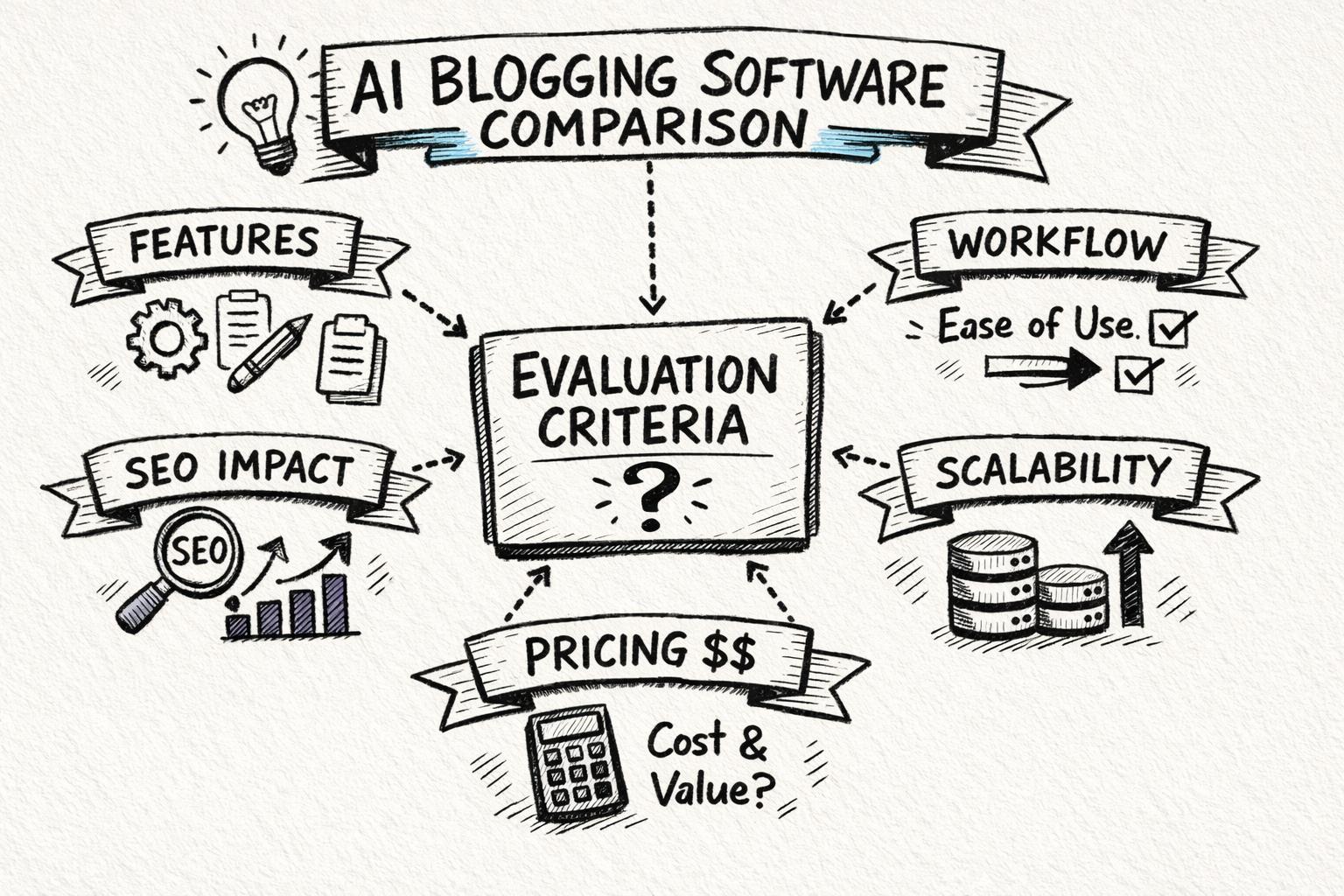
Before comparing vendors, get clear on how you’ll judge them. These are the dimensions that matter most for teams using blogs as a serious SEO growth channel.
The biggest difference between basic AI writers and true AI blogging software is workflow coverage.
Look for platforms that support:
Keyword discovery & clustering – automatic keyword suggestions, topic clustering, and difficulty/volume data so you’re not guessing what to write.
Brief and outline generation – tools that turn keywords into structured outlines aligned with search intent and SERP analysis.
Drafting & editing – AI that can produce full articles, but also rewrites, expansions, and tone/style adjustments.
On-page SEO optimization – guidance on headings, internal links, meta tags, and semantic coverage.
Publishing & distribution – direct integrations with WordPress, Webflow, Shopify, Framer, and other CMSs.
Analytics & iteration – performance dashboards and suggestions for updates, refreshes, and new content opportunities.
The more steps your AI blogging platform covers, the less you rely on patching together point solutions—and the more consistent your SEO results become.
Google’s guidelines are clear: AI-generated content is acceptable as long as it’s helpful, original, and people-first (Google’s helpful content documentation).
When comparing AI blogging tools, evaluate:
Search intent alignment – does the tool analyze top-ranking pages and align structure, depth, and subtopics accordingly?
Semantic coverage – can it suggest related entities and topics that should appear in a comprehensive article?
On-page SEO checks – built-in checks for title tags, meta descriptions, headings, internal links, and URL slugs.
Content quality controls – plagiarism checks, readability scoring, and tone controls.
Update and refresh workflows – support for content updates, rewrites, and optimization based on performance data.
Most “best AI blog writer” tools can produce readable text. The real question is whether they can consistently match your brand’s voice and standards.
Compare platforms on:
Custom style profiles – the ability to train or configure tone, formatting, and examples so the AI writes like your brand.
Long-form coherence – does content stay on track for 1,500–3,000+ words without repetition or fluff?
Fact-handling – tools that encourage citing sources, linking to references, or inserting your own data are far more reliable.
Human-in-the-loop editing – collaboration features for comments, approvals, and multi-user workflows.
If your goal is to publish a few posts per quarter, any AI writer might do. For serious SEO programs, you need automation.
Look for AI blogging software that offers:
Batch generation – create multiple outlines or drafts from a keyword list.
Auto-publishing – schedule or automatically publish approved posts directly to your CMS.
Content calendars – plan and assign content at scale.
Bulk rewrites and updates – refresh older content without manual copying and pasting.
Your AI blogging platform should plug into your existing stack, not fight it.
Important integration points include:
CMS platforms – WordPress, Webflow, Shopify, Framer, custom headless CMSs.
Analytics tools – Google Analytics, Search Console, or built-in dashboards.
Collaboration tools – Slack, email, or project management integrations for approvals and notifications.
As AI content volume grows, so do risks around duplication, hallucinations, and policy violations.
Evaluate platforms on:
Plagiarism detection – basic checks against existing web content.
Originality controls – adjustable creativity levels, paraphrasing, and support for injecting your own data and POV.
User permissions – role-based access, approval workflows, and audit trails.
Compliance – alignment with your industry’s guidelines and AI usage policies.
Finally, compare cost not just by monthly price, but by output and impact:
How many high-quality, SEO-ready articles per month can you realistically produce?
How much manual work is replaced (research, drafting, formatting, publishing)?
What’s the expected SEO impact based on your current traffic and content gaps?
For reference, a single well-optimized blog post can drive compounding traffic for years. According to Ahrefs’ blogging statistics, the top-performing posts often generate the majority of a site’s organic traffic.
Most AI blogging tools fall into three broad categories. Understanding these helps you compare platforms more clearly.
Examples: Chat-based AI models, browser extensions, generic copywriting tools.
Strengths:
Flexible for many writing tasks (emails, ads, outlines, ideas).
Low cost, easy to start.
Good for ideation and first drafts.
Limitations for blogging:
No built-in keyword research or SEO workflows.
No publishing or CMS integrations.
Manual tracking of performance and updates.
These tools are useful, but they’re not full SEO blog software. You’ll need separate tools for research, optimization, and publishing.
Examples: Platforms focused on keyword research, SERP analysis, and content optimization.
Strengths:
Rich SEO data: keyword difficulty, search volume, SERP competitor analysis.
Guidance on headings, topics, and word count.
Some offer AI-assisted outlines or drafts.
Limitations:
Often require manual export/import between the platform and your CMS.
May not support auto-publishing or multi-platform workflows.
AI writing may feel bolted-on rather than central to the workflow.
SEO content platforms are powerful if you already have writers and editors, but less ideal if you want to automate production and publishing.
Examples: Tools like Supablog that combine AI writing, SEO, and publishing workflows into a single system.
Strengths:
Cover the full pipeline: keyword research, AI writing, optimization, images, and publishing.
Multi-platform support (e.g., WordPress, Webflow, Shopify, Framer) from one dashboard.
Automation features like batch generation and auto-publishing.
Built-in analytics to track post performance and iterate.
Limitations:
More opinionated workflows—less ideal if you only want a writing assistant.
Typically priced for teams and businesses rather than casual bloggers.
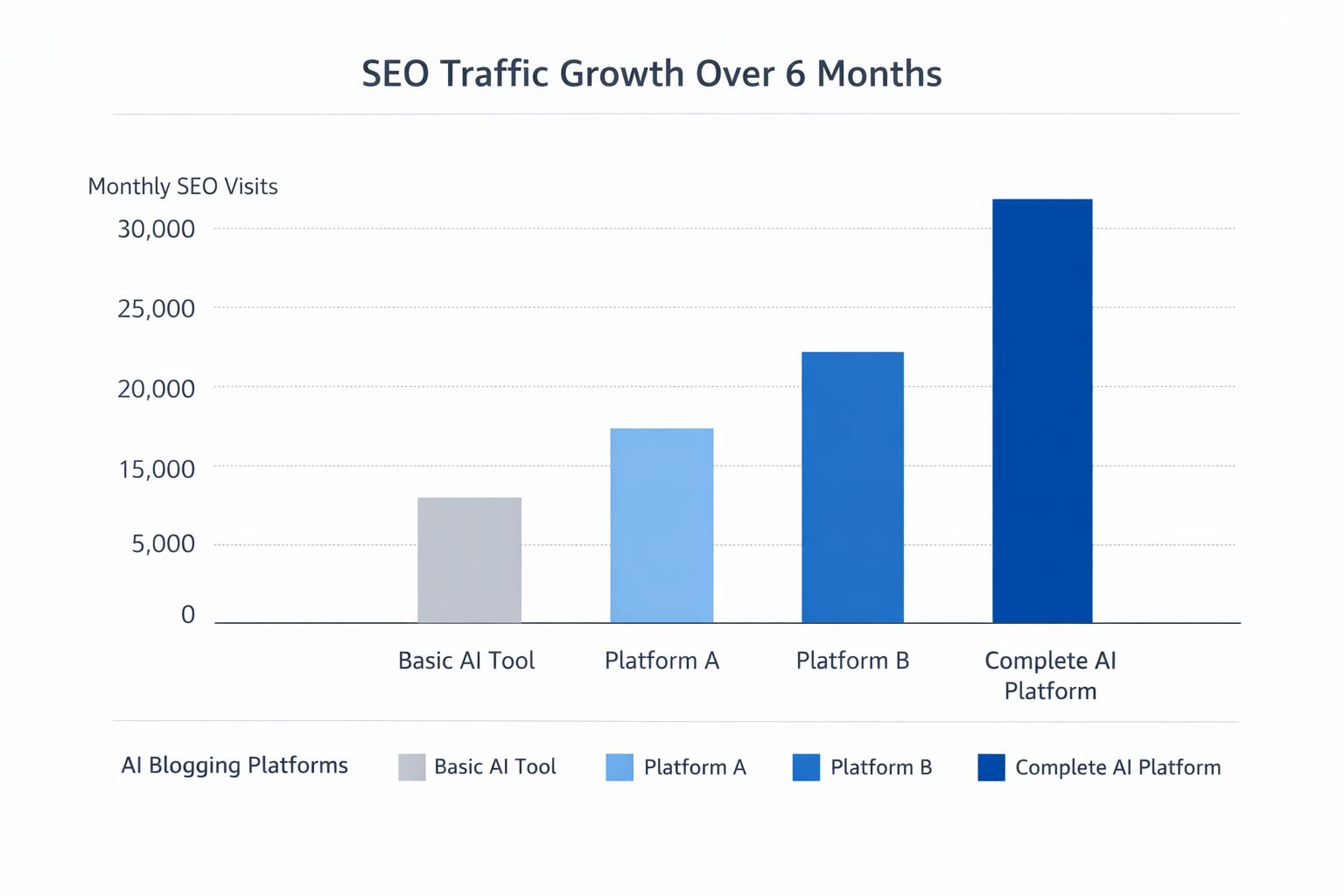
If your blog is a key growth channel, end-to-end AI blogging software usually delivers the best ROI and consistency because it removes manual steps and tool-hopping.
Supablog is an AI-powered blogging platform built specifically for SEO teams, agencies, and businesses that rely on organic traffic. It focuses on end-to-end workflows rather than just drafting text.
Automatic keyword research – hands-free discovery of topics and keywords, so you always have a prioritized content pipeline.
AI-generated, SEO-optimized blog posts – up to 30 AI-generated and auto-published articles per month on the standard plan.
Multi-platform publishing – publish directly to WordPress, Webflow, Shopify, Framer, and more from one dashboard.
Built-in AI image generation – create on-brand visuals to pair with your posts.
Performance analytics – track how your content performs and refine your strategy.
Backlink growth – high DR backlinks via an automated backlink exchange to support domain authority.
Multilingual support – generate content in 150+ languages for international SEO strategies.
Supablog offers a 14-day free trial, then a simple pricing model at $99/month that includes:
30 AI-generated, auto-published articles per month
Unlimited users per organization
Unlimited AI rewrites
Access to all publishing integrations and analytics
For many teams, that cost is less than a single freelance article—yet it covers an entire month of consistent, SEO-ready publishing.
Content marketers and SEO teams who need to scale production without adding headcount.
Agencies managing blogs for multiple clients across different CMS platforms.
Solo founders and bloggers who want consistent, professional-quality posts but don’t have time for full research and writing.
Ecommerce and SaaS businesses that rely on blogs to drive organic traffic and educate customers.
Use this checklist to evaluate any AI blogging platform you’re considering (including Supablog) and to compare them side by side.
Does it provide built-in keyword research and topic discovery?
Can it create content clusters and support pillar/cluster strategies?
Does it analyze the current SERP to align with search intent?
Can it generate long-form articles (1,500+ words) that are logically structured?
Does it support brand voice configuration and reusable style settings?
Are there SEO recommendations for headings, internal links, and semantic coverage?
Is there support for AI image generation or easy media embedding?
Does it integrate with your CMS (WordPress, Webflow, Shopify, Framer, etc.)?
Can you auto-publish or schedule posts directly from the platform?
Is there support for multi-site or multi-brand management?
Does it show traffic, rankings, and conversions for each post?
Can it suggest content updates or rewrites based on performance?
Does it help you identify new keyword opportunities from existing content?
Are there roles and permissions for writers, editors, and admins?
Is there a clear approval workflow before publishing?
Does it support comments and collaboration inside the editor?
What’s the monthly article limit and how does that map to your strategy?
Are there limits on users, projects, or sites?
What’s the real cost per SEO-ready article compared to freelancers or agencies?
To make a smart choice, avoid these common pitfalls:
Many platforms sell on “X,000 words per month.” That’s not what drives revenue. Focus on how many high-quality, search-optimized articles you can publish and how well they perform over time.
If your team is still copying content from one tool into a CMS, formatting manually, adding images, and scheduling posts by hand, you’re leaving efficiency on the table. Over a year, those manual steps add up to dozens of lost hours.
AI can write fast, but it can’t replace strategy. You still need a clear understanding of your audience, positioning, and funnel. Use AI blogging software to amplify a solid SEO strategy, not replace it.
Resources like Backlinko’s content SEO guides or Moz’s beginner’s guide to SEO can help you build that foundation.
A tool that works for one writer may break down when you have multiple brands, languages, or stakeholders. When comparing platforms, think 12–24 months ahead: will this still work when you’re publishing 20–50 posts per month?
Most AI content platforms offer free trials. Use them deliberately to test real-world performance, not just to play with prompts.
Pick 3–5 target keywords with clear business value.
Decide what “success” looks like: time saved, quality threshold, SEO readiness, or publishing speed.
Use the tool for research, outlining, drafting, optimizing, and publishing.
Note where you still rely on other tools or manual work.
Review articles for accuracy, depth, and originality.
Check on-page SEO elements: headings, internal links, meta tags.
Have at least one subject-matter expert review for quality.
Track how long each stage takes with and without the tool.
Estimate how this scales to your monthly content goals.
For light usage, a generic AI writer plus manual SEO tools may be enough.
For a serious content engine, an end-to-end AI blogging platform like Supablog will usually deliver better long-term SEO impact and operational efficiency.
Here’s a simple way to decide which category of tool fits you best:
You have limited time and budget.
You need consistent publishing more than complex workflows.
Best fit: A focused AI blogging platform with built-in SEO and publishing, or a combination of a generic AI writer plus a simple SEO tool. Supablog can be a strong option here if you want to “set and forget” a baseline content cadence.
You manage multiple channels but need blogs to drive steady organic growth.
You care about collaboration, approvals, and analytics.
Best fit: An end-to-end AI blogging platform with multi-user support, publishing integrations, and analytics—exactly the space where Supablog is designed to operate.
You manage several sites or brands.
You need repeatable workflows and governance.
Best fit: A robust AI content platform that supports multi-site publishing, roles/permissions, and potentially custom feature requests. Supablog’s unlimited users, multi-platform publishing, and support for custom features are designed with this use case in mind.
When you compare AI blogging software, don’t just ask “Which tool writes the fastest?” Ask:
Which platform helps us publish consistently with minimal friction?
Which one supports our SEO strategy instead of forcing workarounds?
Which option will still work when we’ve scaled content 5–10x?
If you’re ready to see what an end-to-end AI blogging workflow looks like in practice, start a trial of an AI blogging platform like Supablog, run a focused experiment for a few weeks, and measure the impact on both time saved and organic performance.
The right decision now can turn your blog from a sporadic side project into a predictable, scalable growth engine powered by AI.
Written by
Pranjal JainFounder of Supablog, Pranjal is a software engineer passionate about building SaaS products that empower founders to grow and scale their businesses. With a strong focus on practical innovation, he creates tools that solve real-world challenges in the SaaS ecosystem. Outside of building and writing, he enjoys reading and traveling, drawing inspiration from new ideas, cultures, and experiences.