From Zero to 100K Monthly Visitors: An AI-Driven Blog Growth Case Study
See the exact content strategy, publishing cadence, and tools one site used to reach 100K organic visits with AI-assisted blogging.

See the exact content strategy, publishing cadence, and tools one site used to reach 100K organic visits with AI-assisted blogging.
Pranjal Jain
If you’re wondering whether AI can actually drive meaningful organic traffic growth, this AI blog growth case study walks through the full journey: strategy, execution, numbers, and what really moved the needle.
We’ll break down how one B2B site went from essentially zero to 100K organic visitors per month in 12 months using an AI-assisted content engine, lean human editing, and a disciplined SEO process.
You’ll see the exact publishing cadence, content mix, on-page SEO workflow, and tools (including an AI blogging platform similar to Supablog) that made this sustainable instead of a one-off spike.
Use this as a practical blueprint: adapt the numbers to your niche, but keep the principles and process.
This AI blog growth case study is based on a mid-sized B2B SaaS company in the marketing technology space. Before investing in content, they relied mostly on paid search and outbound sales.
Starting point (Month 0):
Domain Rating (DR): 24
Organic traffic: ~1,500 sessions/month (mostly branded)
Blog content: 18 posts, irregularly published, no clear strategy
Content team: 1 part-time marketer, freelance designer, no in-house writer
12-month goal: Reach 100,000 organic sessions/month and generate at least 250 marketing-qualified leads per month from organic content.
Instead of hiring multiple writers, they adopted an AI blogging platform to handle drafting, SEO optimization, and publishing workflows, while keeping humans focused on strategy, outlines, and final edits.
The team didn’t just “let AI write everything.” They designed a system where AI multiplied strategic human input.
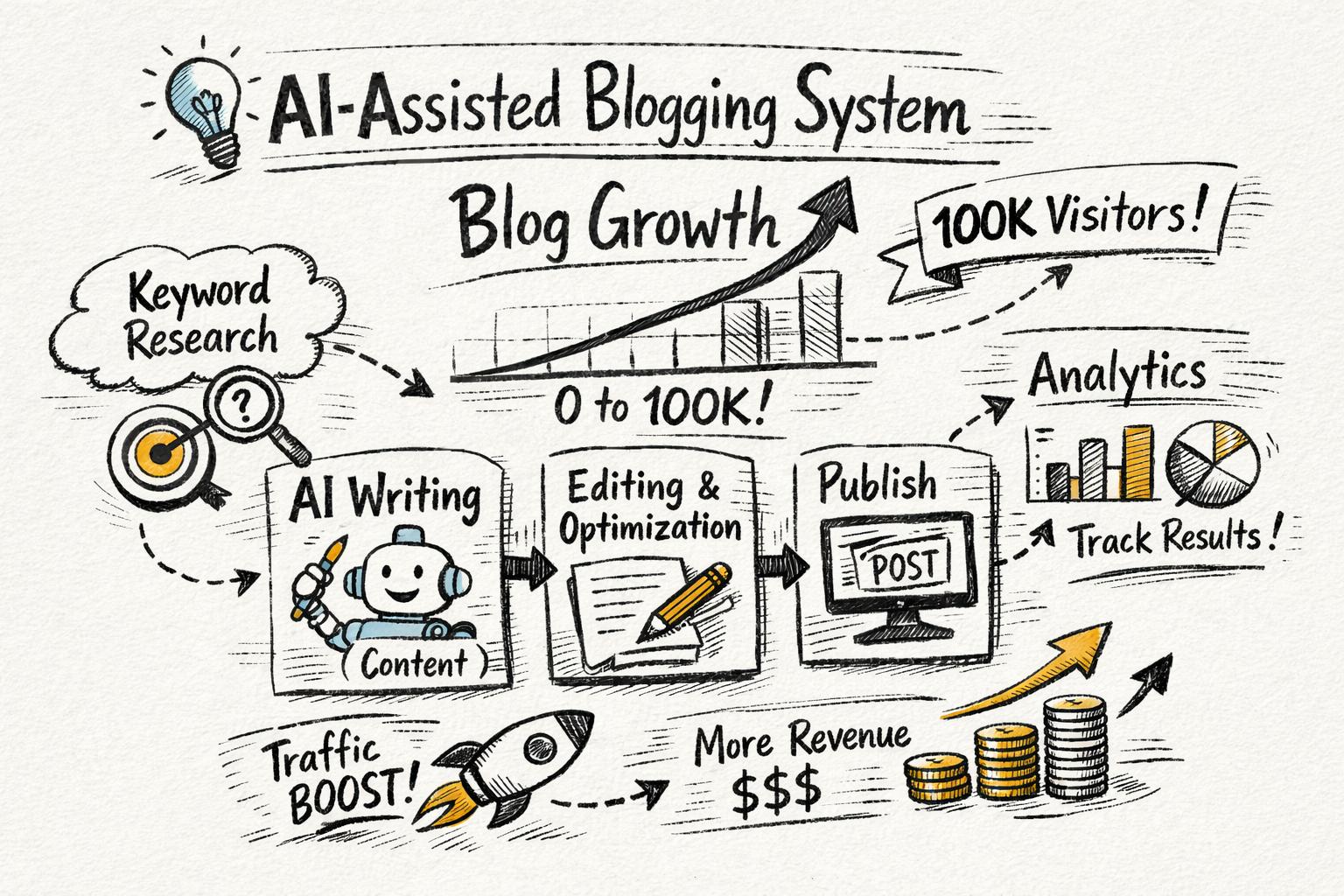
The content engine had five core components:
1. Topic & keyword strategy: Focus on bottom and mid-funnel queries in their niche, then expand to top-of-funnel educational content.
2. AI-assisted drafting: Use an AI blog writer to produce first drafts based on detailed outlines and SEO briefs.
3. Human editing & subject-matter input: Add real examples, screenshots, proprietary frameworks, and case data.
4. SEO optimization & internal linking: On-page SEO, schema where relevant, and purposeful internal links.
5. Consistent publishing & iteration: Ship on a fixed cadence, review analytics, and refine topics monthly.
Here’s how organic traffic grew over the first year.
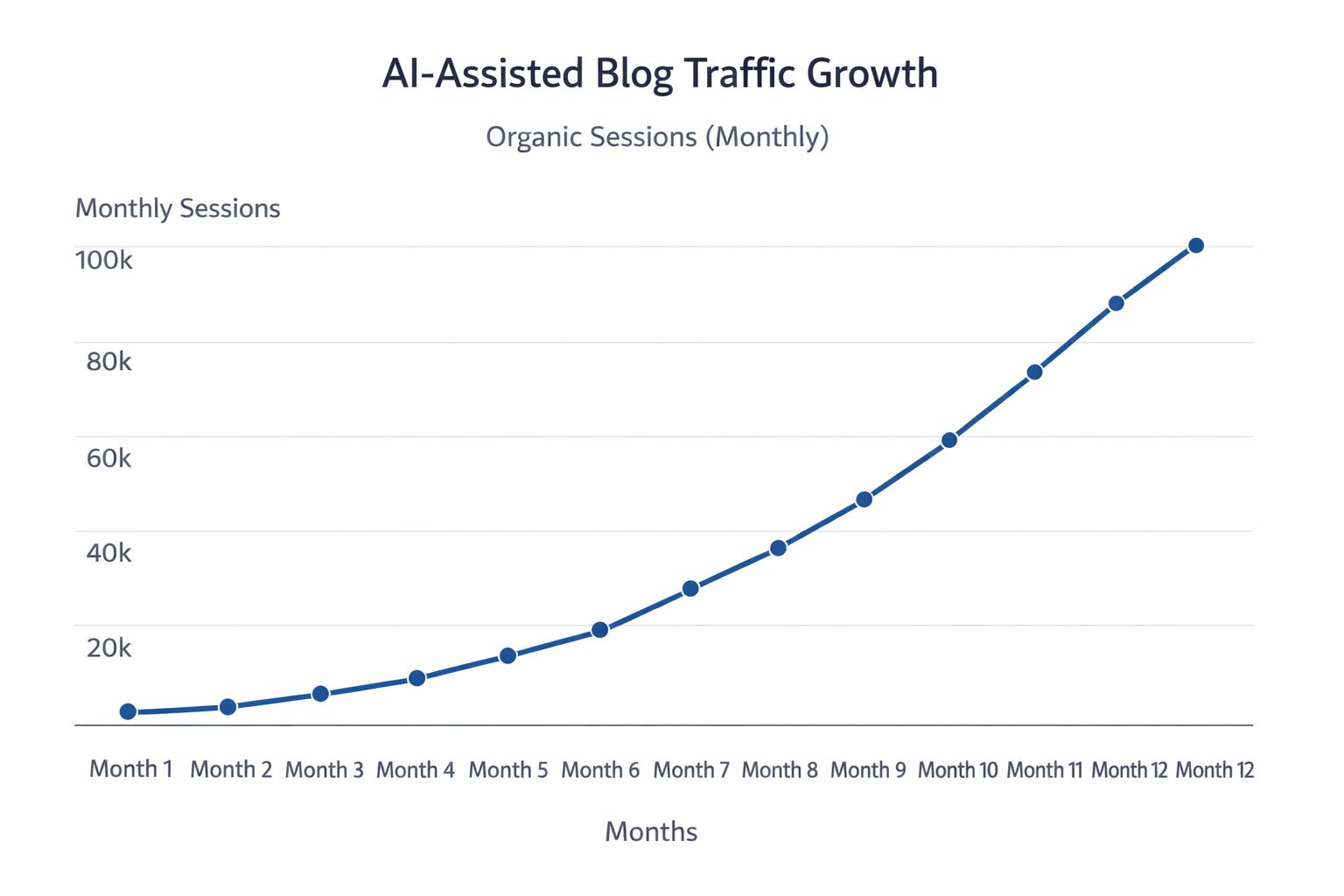
Traffic by milestone:
Month 1: 2,300 sessions (foundation + first cluster live)
Month 3: 6,800 sessions (first posts start ranking top 10)
Month 6: 28,500 sessions (multiple clusters maturing)
Month 9: 63,000 sessions (compounding rankings + backlinks)
Month 12: 104,200 sessions (100K+ milestone)
Lead generation followed a similar trend, increasing from ~20 organic leads/month to ~310 by Month 12, with the strongest conversion rates coming from comparison pages, case studies, and tool-specific how-tos.
The team built their content strategy around search intent and topic clusters, not random blog ideas.
They identified three main themes aligned to their product and audience pain points:
Cluster A: “How to” workflows (e.g., “how to build a content calendar,” “how to measure content ROI”).
Cluster B: Tool and platform queries (e.g., “best AI blogging platform,” “WordPress SEO for B2B SaaS”).
Cluster C: Strategy and frameworks (e.g., “content-led growth strategy,” “SEO content operations”).
Each cluster had:
1 in-depth pillar page (3,000–4,000 words)
10–25 supporting articles (1,500–2,200 words)
Internal links between cluster pages and product pages
Instead of manually building keyword lists in spreadsheets, they used an AI SEO tool to:
Generate long lists of long-tail, low-competition keywords from a few seed terms.
Group keywords into intent-based clusters (informational, commercial, transactional).
Highlight questions and subtopics to cover in each article.
They then validated these ideas using tools like Ahrefs keyword difficulty and traffic potential and cross-checked SERPs to ensure they could realistically compete.
For each keyword, they matched the content type to search intent:
Informational: Guides, checklists, frameworks.
Commercial investigation: Comparisons, “best tools,” vendor lists, feature breakdowns.
Transactional / product-led: Use-case pages, templates, and walkthroughs featuring their product.
This ensured that the growing traffic wasn’t just vanity—each article had a path to product discovery and sign-ups.
One of the biggest levers in this AI content success story was consistent, high-volume publishing without burning out the team.
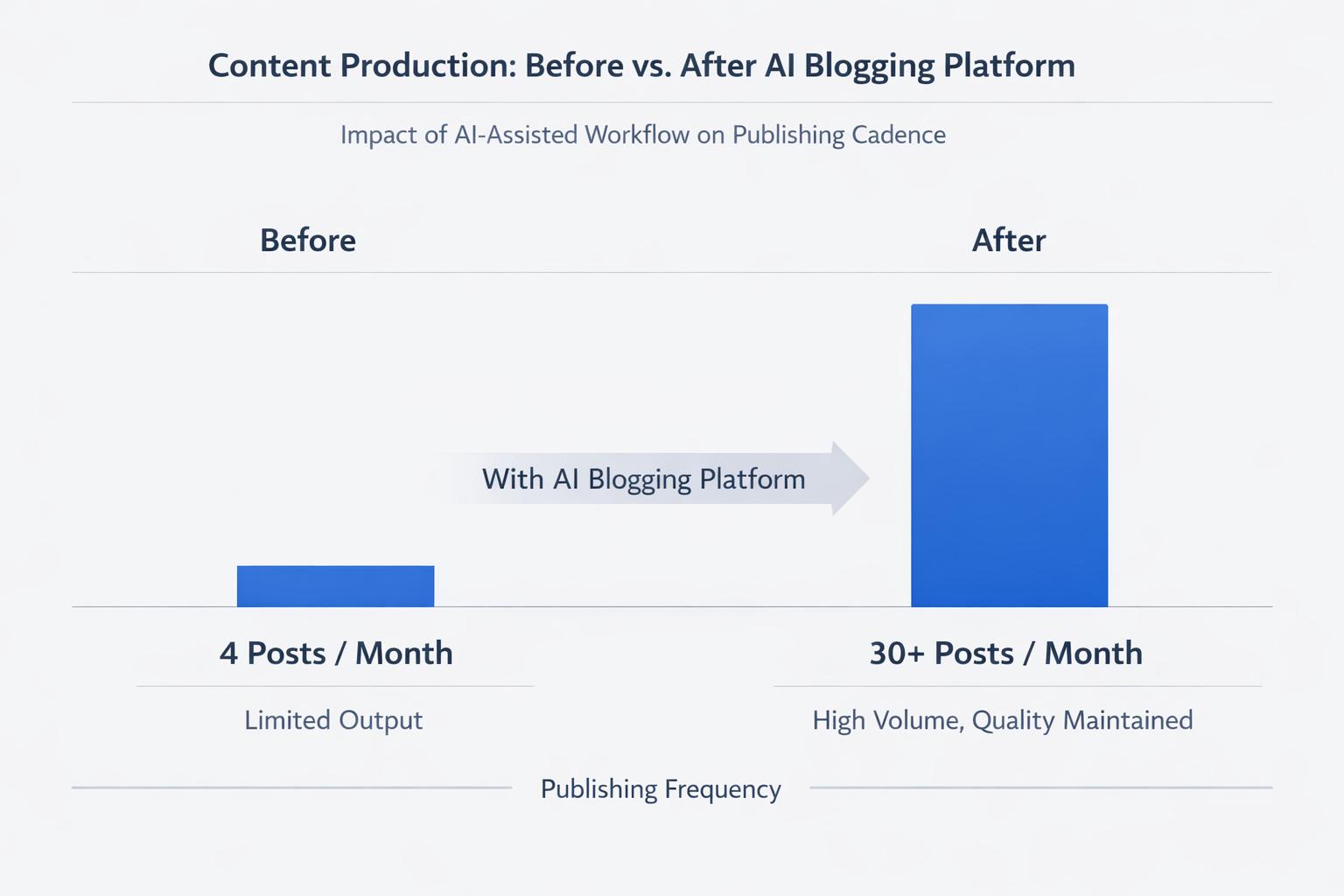
Before AI:
1 post every 1–2 weeks
~4 posts/month
Each post took 8–12 hours of human work (research, writing, editing, images)
After AI-assisted workflow:
5–7 posts per week
20–30 posts/month (peaking at 35 during cluster sprints)
Human time per post: ~2–3 hours (strategy, outline, edit, review)
The cadence by phase:
Months 1–3: 20 posts/month focused on core clusters and pillar pages.
Months 4–6: 25–30 posts/month adding long-tail support and updating early posts.
Months 7–12: 20–25 posts/month, with more emphasis on optimization, internal linking, and product-led content.
This is a classic example of blog scaling with AI: using automation to increase volume while still anchoring every article in a clear strategy.
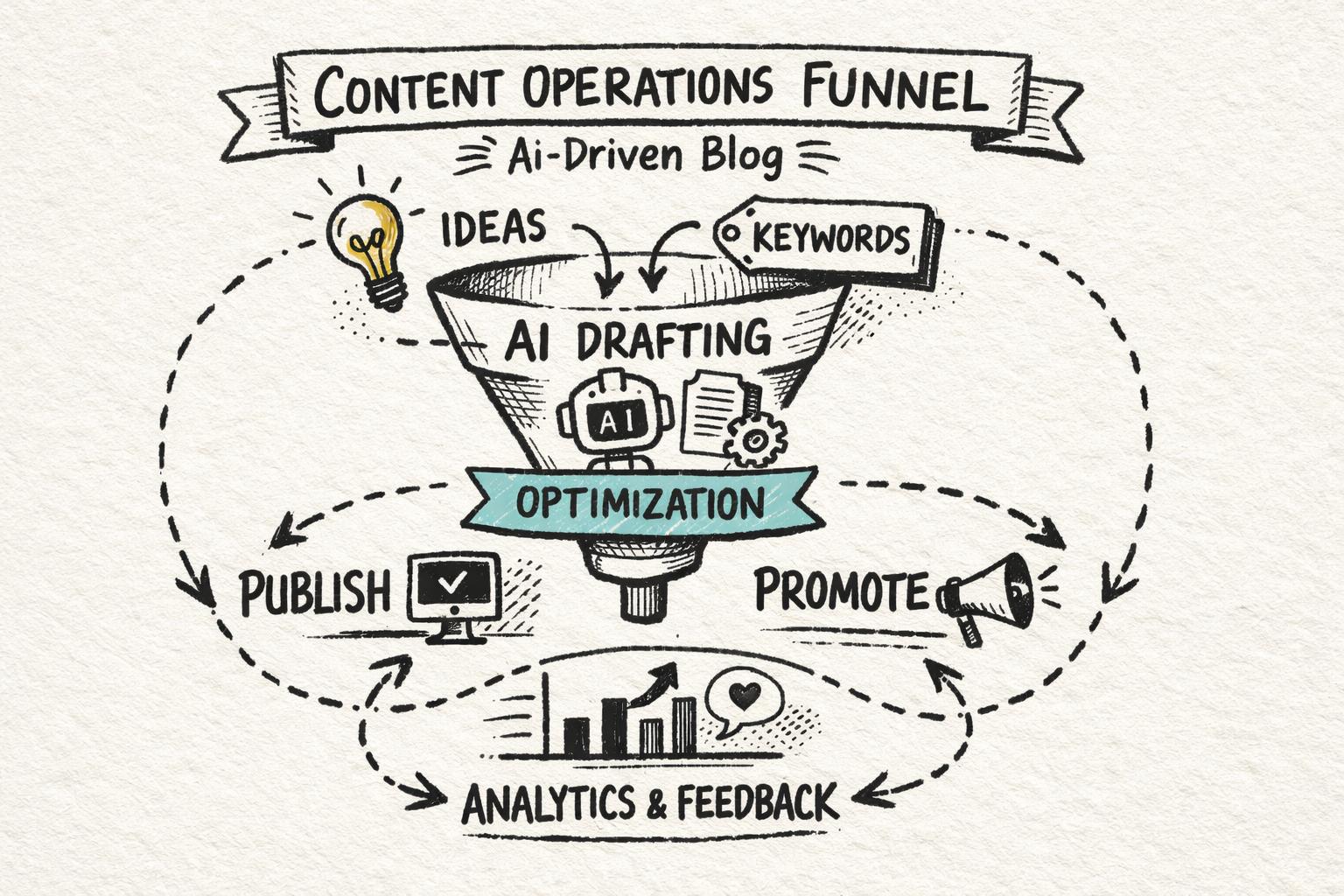
Here’s the exact workflow they used for each article, from idea to published post.
For each new article, the strategist selected:
Primary keyword + 3–7 secondary keywords
Search intent (informational, commercial, transactional)
Target funnel stage (TOFU, MOFU, BOFU)
Core product tie-in (feature, use case, or problem it solves)
They documented this in a simple content brief template inside their AI blogging platform.
Instead of letting AI invent the structure, the strategist created a detailed outline:
H2/H3 headings mapped to subtopics and questions from keyword research.
Notes on where to insert product examples, screenshots, or case snippets.
Links to internal resources and any external studies to reference.
This ensured the AI draft would follow a logical, differentiated structure instead of generic filler.
Using an AI blog writer similar to Supablog, they generated a ~1,800–2,200 word draft by:
Feeding the outline, brief, and target keywords into the tool.
Setting tone (professional, practical, slightly conversational).
Enabling built-in SEO suggestions (title tags, meta descriptions, headings).
The result: a solid, structured draft that covered 70–80% of the content needs in 10–15 minutes.
This is where they turned AI output into authoritative content:
Added first-hand examples from their own campaigns and customer stories.
Inserted screenshots, mini case studies, and proprietary frameworks.
Removed generic or redundant paragraphs.
Fact-checked any claims and added citations to credible sources like Google’s helpful content guidelines or Backlinko’s ranking factor studies.
On average, this edit pass took 60–90 minutes per article.
Next, they used the platform’s SEO optimization features to:
Refine title tags, meta descriptions, and H1s for click-through and clarity.
Check keyword placement in headings, introduction, and conclusion.
Add schema markup for FAQs or how-to content when appropriate.
Insert internal links to related posts, cluster pillars, and key product pages.
They also built a simple internal linking rule: every new post must link to at least 2 other posts in its cluster and 1 relevant product or use-case page.
To keep posts engaging without slowing production:
AI-generated header images and diagrams for most posts.
Embedded relevant YouTube videos (their own or trusted partners) where it added real value.
Used a multi-platform publishing workflow to push content to WordPress and their resource center from one dashboard.
Publishing itself was largely automated: once approved, posts were scheduled in batches and syndicated to their email list and social channels.
Several patterns emerged as the main drivers of this AI content marketing results story.
Instead of battling for ultra-competitive head terms early, they targeted long-tail queries with:
Clear intent.
Lower competition.
Strong fit with their product.
These pages started ranking faster, built topical authority, and later helped them move up for broader terms.
Roughly 30–40% of posts were product-led: they solved a problem while naturally showcasing how the product helped.
Examples:
“How to Build a Content Calendar in 60 Minutes (Template + Workflow)” featuring their scheduling features.
“From Idea to Published Post in 2 Hours: Our AI Blogging Workflow” walking through their own tool setup.
These posts converted 2–3x better than purely educational content.
Every month, they used analytics to identify:
Posts stuck on page 2–3.
Pages losing impressions or clicks.
Articles that were starting to rank for new, related queries.
They then used AI to rewrite and expand sections, add new examples, and better target emerging keywords—often lifting those posts into the top 5 results.
They didn’t run an aggressive cold outreach link-building campaign. Instead, they focused on:
Publishing original research and benchmarks that attracted natural links.
Guest posts and co-marketing with complementary tools.
Participating in curated backlink exchanges with vetted, relevant sites.
By Month 12, their DR had increased from 24 to 39, which significantly improved their ability to rank for more competitive keywords.
Not everything in this AI SEO case study was a win. A few bets failed and were deliberately cut.
Purely AI-written posts with no human edit: These underperformed on engagement and rankings, and occasionally included inaccuracies. They were either heavily edited later or removed.
Chasing news-y trends: Posts about short-lived AI news spikes brought traffic but almost no leads, so they refocused on evergreen topics.
Over-optimized, keyword-stuffed content: Early experiments with aggressive keyword repetition led to poor UX signals. They shifted to natural language and intent-first writing, aligned with Google’s helpful content update.
One of the most important aspects of this AI blog growth case study is that it was achieved with a lean team.
People involved:
1 Content & SEO lead (strategy, briefs, editing, analytics)
1 part-time subject-matter expert (review, quotes, examples)
1 marketing ops generalist (publishing, distribution, reporting)
Tools stack (representative):
AI blogging platform (like Supablog) for drafting, SEO suggestions, internal linking, and multi-platform publishing.
Keyword research tool (Ahrefs, Semrush, or similar).
Analytics: Google Analytics + Google Search Console.
Design: lightweight use of Figma/Canva plus AI image generation.
Time investment per week:
Content & SEO lead: 15–20 hours.
SME: 2–4 hours.
Marketing ops: 5–7 hours.
Without AI, this level of output would have required at least 1–2 full-time writers plus additional editorial support.
While this case study is anonymized, the workflow closely mirrors what Supablog is designed to do out of the box.
With Supablog, a similar team could:
Use automatic keyword research to generate and prioritize content ideas aligned with search intent.
Have AI draft SEO-optimized blog posts based on briefs and outlines, including meta tags and headings.
Generate on-brand images for posts without waiting on design.
Auto-publish up to 30 articles/month to WordPress, Webflow, Shopify, Framer, and more.
Monitor blog performance analytics and identify posts to refresh or expand.
Leverage automated backlink exchange to steadily improve domain authority.
This keeps humans focused on what they do best—strategy, expertise, and storytelling—while Supablog handles the repetitive parts of content production and distribution.
Whether you use Supablog or another AI content platform, here are the most transferable lessons from this AI blog growth case study:
Start with a clear traffic and lead goal (e.g., 100K visits and 250 MQLs in 12 months) and work backward to publishing cadence.
Build 2–4 tight topic clusters around your product and audience pain points before chasing every idea.
Use AI for speed and consistency, but always layer human expertise, examples, and brand voice.
Prioritize long-tail keywords early to build momentum and topical authority.
Refresh and expand winning posts instead of only creating new ones.
Measure what matters: rankings, organic sessions, and conversions—not just impressions.
If you rely on organic traffic for pipeline, the question isn’t whether to use AI, but how to use it responsibly and effectively.
AI won’t replace strategy, positioning, or true expertise—but as this case study shows, it can multiply the output of a small team and help you reach milestones like 100K organic visitors per month far faster than manual workflows alone.
If you want to test a similar approach, you can start with:
Defining your 12-month traffic and lead targets.
Outlining 2–3 core topic clusters and 10–15 posts each.
Using an AI blogging platform like Supablog to draft, optimize, and publish your first 20–30 articles.
From there, let the data guide you: double down on what ranks and converts, and keep refining your AI-assisted workflow until your blog becomes a predictable growth channel.
Written by
Pranjal JainFounder of Supablog, Pranjal is a software engineer passionate about building SaaS products that empower founders to grow and scale their businesses. With a strong focus on practical innovation, he creates tools that solve real-world challenges in the SaaS ecosystem. Outside of building and writing, he enjoys reading and traveling, drawing inspiration from new ideas, cultures, and experiences.