Backlink Building With Content: How AI Can Help You Earn Links at Scale
Use AI to create link-worthy assets, outreach angles, and refreshes that attract high-authority backlinks naturally.

Use AI to create link-worthy assets, outreach angles, and refreshes that attract high-authority backlinks naturally.
Pranjal Jain
Most teams know they need more high-quality backlinks. Fewer know how to earn them consistently without spamming inboxes or churning out forgettable content. That’s where AI for backlink building changes the game.
Used well, AI won’t magically “create backlinks” for you. But it will help you research, plan, write, and promote the kind of content that people actually want to link to—at a scale that would be impossible manually.
In this guide, you’ll learn a practical, ethical framework for using AI to power content-led link building: from ideation and asset creation to outreach angles, personalization, and refreshing old posts that deserve more links.
We’ll focus on scalable workflows you can plug into an AI blogging platform like Supablog, so your link building becomes a predictable engine for organic growth instead of a one-off campaign.
Google’s spam policies get stricter every year, but one thing hasn’t changed: the safest, most durable backlinks come from genuinely useful content. Not from link farms. Not from paid lists. From assets people reference because they help their audience.
Content-led link building means you:
Create assets designed to attract links (studies, tools, guides, data, frameworks)
Proactively put those assets in front of people who would naturally reference them
Keep those assets fresh so they continue earning links over time
AI’s role is to make each of those steps faster, cheaper, and more consistent—without crossing into manipulative territory.
Before we dive into tactics, it’s important to set expectations.
Turn raw ideas into structured, SEO-ready content briefs
Draft high-quality articles, reports, and landing pages that others want to cite
Summarize data into quotable stats and visuals that attract links
Generate dozens of personalized outreach angles and subject lines
Refresh and expand existing content to reclaim or win new backlinks
Auto-generate fake statistics or made-up studies
Spin content scraped from competitors
Send bulk, non-personalized outreach emails at scale
Promise or buy links (this risks penalties and long-term damage)
Used strategically, AI is a force multiplier for your existing link building strategy—not a shortcut that replaces it.
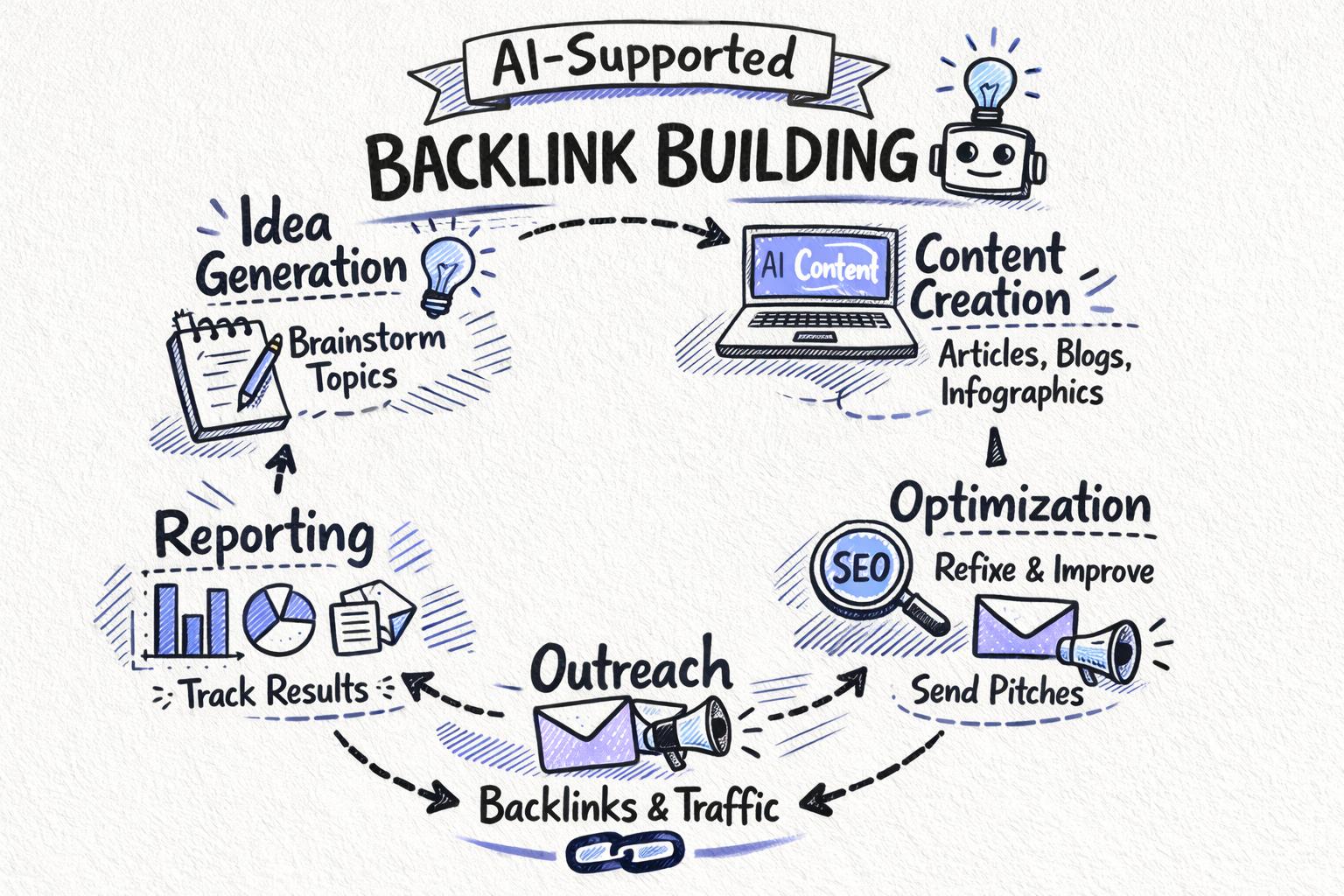
Let’s break AI-powered link building into five repeatable pillars you can operationalize:
1. Research & opportunity discovery
2. Linkable asset creation
3. On-page optimization for links (not just rankings)
4. AI-assisted outreach & relationship building
5. Updating, repurposing, and scaling what works
Strong backlinks start with strong topics. AI can help you find link-worthy angles inside your niche instead of generic keyword ideas.
Not every keyword is equally likely to attract links. AI can help you prioritize topics where people naturally link out, such as:
Industry statistics (e.g., “SaaS churn rate statistics”)
How-to frameworks and templates
Definitions and glossaries (for beginners)
Original research or benchmark reports
Free tools and calculators
Workflow example:
Use your SEO tool to export top-ranking pages for a seed topic.
Feed sample URLs and SERP snippets into an AI assistant.
Ask it to classify each page by intent to attract links and suggest angles that would be more referenceable (e.g., “turn this guide into a yearly benchmark report”).
Platforms like Supablog automate the first part—hands-free keyword research—so you start with topics that already have search demand before layering on linkability.
Traditional backlink analysis is slow: export, filter, scan manually. AI can summarize patterns in minutes.
Try this process:
Export competitor backlinks from a tool like Ahrefs or Semrush.
Sample a few hundred rows and feed them into an AI assistant.
Ask: “What types of content are earning the most links? What formats? What topics? What anchor text patterns?”
You’ll quickly see patterns like “statistics pages get links from journalists” or “comparison posts attract links from roundups,” which should inform your own content-led link building roadmap.
For deeper context on how Google evaluates links, review Google’s own guidance on link spam policies.
The best way to use AI for backlink building is to ship more—and better—linkable assets. Here are formats that work especially well.
Journalists, bloggers, and creators constantly need fresh stats. You can become a go-to source by publishing:
“State of the industry” reports
Yearly benchmark studies
Curated statistics pages with commentary
How AI helps:
Aggregate data from trusted sources (e.g., Pew Research Center, Statista) and summarize key takeaways.
Draft narrative sections that explain what the data means and why it matters.
Suggest charts and visualizations you can turn into images or embeds.
Important: Always cite original sources and avoid inventing numbers. AI should summarize and structure, not fabricate.
Comprehensive, well-structured guides tend to attract links from:
Smaller blogs that don’t want to reinvent the wheel
Communities and forums that need a “canonical” resource
Partners and customers who reference your process
Use AI to:
Turn your internal SOPs into public-facing guides
Organize complex topics into step-by-step frameworks
Generate examples, checklists, and FAQs to deepen the piece
Interactive tools and downloadable templates are link magnets. Even simple ones can earn backlinks for years.
AI can help you:
Brainstorm tool ideas based on pain points in your niche
Write the copy, onboarding, and help text for those tools
Create spreadsheet templates or prompt libraries people can copy
Once you have the asset, you can publish it through a platform like Supablog alongside an SEO-optimized explainer article to maximize both traffic and links.
Most teams optimize content for rankings. Fewer optimize it to be linkable. AI can help you do both.
People link to content that’s simple to reference. Use AI to identify and enhance quotable elements:
Short, punchy definitions at the top of the page
Numbered lists and frameworks with memorable names
Clear “Key takeaways” sections for each major heading
Pull quotes that summarize a contrarian or insightful view
Ask your AI assistant: “Rewrite this section so that it includes 3 short, quotable sentences someone might cite in another article.”
Visuals are underrated for link building. Charts, diagrams, and process visuals often get embedded with a link back.
AI can help you:
Decide which concepts need a visual explanation
Generate chart descriptions that designers (or tools) can convert into graphics
Write alt text and captions that clarify the value of each visual
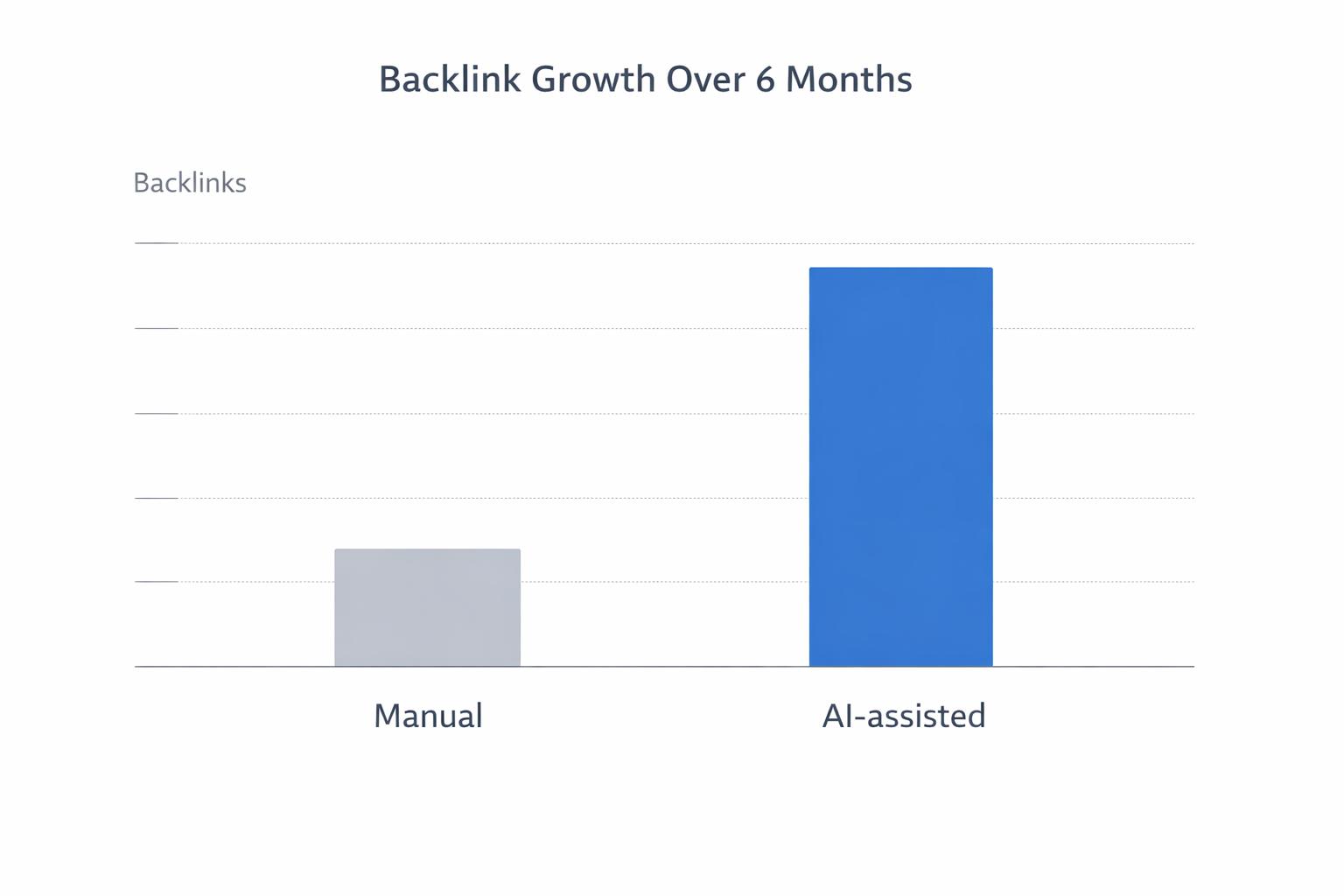
Supablog includes AI image generation for blogs, so you can quickly add custom visuals that make your posts more referenceable without hiring a designer for every article.
Even the best asset can’t earn links if nobody discovers it. AI-powered SEO tools help you:
Map primary and secondary keywords to each asset
Optimize headings, meta descriptions, and internal links
Fill content gaps that competitors cover but you don’t
With Supablog’s SEO-optimized blog post generation, you can go from idea to optimized draft quickly, then layer on your expertise and proprietary data.
Backlinks don’t appear just because you hit publish. You still need to promote your assets—but AI can make outreach more strategic and less soul-crushing.
Instead of scraping random emails, focus on relevance and mutual value. AI can help you:
Analyze SERPs and identify authors who already link to similar resources
Cluster prospects by topic, audience, or content format
Prioritize sites by authority and likelihood to respond
Feed an AI assistant a sample of your ideal prospects and ask it to describe common traits (content topics, formats, tone). Use that to refine your outreach list manually in your SEO tool or CRM.
This is where AI outreach ideas shine. Instead of sending the same “we wrote a guide, please link” email, AI can help you craft messages that feel genuinely tailored.
Example prompts:
“Given this prospect’s article and our asset, suggest 5 ways our content could add value to their readers.”
“Write 3 outreach email drafts that reference specific sections of their post and propose a relevant update.”
“Turn this generic pitch into a concise, 120-word email with a clear value proposition.”
You still review and edit every message, but AI handles the heavy lifting so you can send fewer, better emails instead of blasting thousands.
Long-term, the most valuable backlinks come from ongoing relationships: partners, industry peers, creators, and journalists.
AI can help you:
Summarize long email threads and highlight next steps
Draft follow-ups that add value (e.g., sharing new data, co-marketing ideas)
Turn interviews or webinars into recap posts your partners will link to
Supablog’s multi-platform publishing makes it easy to co-create content with partners and publish it across WordPress, Webflow, Shopify, and more—multiplying your link opportunities from a single collaboration.
Some of your best future backlinks will come from content you’ve already published. AI makes it much easier to identify and upgrade these hidden winners.
Look for:
Posts with growing traffic but few referring domains
Pages that rank on page 2 for high-intent, link-friendly terms
Old “statistics” or “trends” posts that are now outdated
Then use AI to:
Update data and examples to the current year
Add new sections that cover missed subtopics
Improve intros and conclusions to highlight key takeaways
Supablog’s unlimited AI rewrites are ideal here: you can iterate on sections until they’re clear, quotable, and link-worthy—without rewriting the entire article from scratch.
Repurposing is one of the highest-ROI backlink strategies. From a single report or guide, AI can help you create:
Spin-off blog posts targeting related keywords
Guest post outlines tailored to specific publications
Social threads that attract organic mentions and links
Email sequences that drive traffic (and thus natural links)
Because Supablog supports marketing content automation and performance analytics, you can see which repurposed pieces attract the most links and double down on those formats.
Finally, there’s a middle ground between purely organic links and paid schemes: curated, relevant backlink exchanges.
Supablog includes a high DR backlink exchange feature that helps you:
Match with other sites in complementary niches
Exchange contextual links within high-quality content (not spammy pages)
Maintain relevance and quality while growing your domain authority
Combine this with your content-led approach, and each new article you publish has multiple paths to earning links: organic citations, outreach-driven mentions, and curated exchanges.
To keep your strategy sustainable and future-proof, follow these guardrails.
AI can draft, but it can’t replace your experience. Before publishing:
Add your own case studies, screenshots, and internal data
Fact-check any claims or statistics
Adjust tone and nuance to match your brand
This human layer is what makes your content truly link-worthy instead of generic.
Nothing kills link potential faster than untrustworthy content. Make sure you:
Cite original sources for any third-party data
Distinguish clearly between your own research and external stats
Avoid overclaiming what your data proves
Following the principles in Google’s helpful content guidelines will keep you aligned with what search engines (and humans) consider trustworthy.
AI makes it easy to scale—but you still need judgment. A handful of links from tightly relevant, high-quality sites beats hundreds of low-quality mentions.
Use AI to qualify opportunities, not just generate more of them.
While you can implement many of these tactics with generic tools, an integrated platform like Supablog makes it much easier to run them as a system.
Here’s how a typical workflow might look:
Automatic keyword research surfaces topics with both search demand and link potential.
AI blog writer turns those topics into SEO-optimized drafts tailored to your audience.
AI image generation adds custom visuals that increase shareability and link-worthiness.
Multi-platform publishing pushes your content to WordPress, Webflow, Shopify, Framer, and more from one dashboard.
Backlink exchange pairs your best pieces with relevant partners for contextual, high-DR links.
Performance analytics show which posts attract the most links and traffic so you can double down.
AI rewrites and updates keep your top performers fresh, accurate, and linkable over time.
The result: a repeatable, AI-assisted system for link building with content that compounds month after month.
If you remember nothing else from this guide, keep these principles in mind:
AI is a multiplier, not a shortcut—use it to enhance genuine value, not replace it.
Focus on linkable assets: data, tools, templates, frameworks, and truly comprehensive guides.
Optimize content to be easy to quote, not just easy to rank.
Use AI for research, drafting, and outreach ideas—but keep humans in the loop for quality and relationships.
Continuously refresh and repurpose what works instead of chasing only new topics.
When you combine these practices with a platform like Supablog—built for AI-powered content and SEO backlinks—you move from sporadic link wins to a consistent, scalable backlink engine.
If you’re ready to test AI-assisted backlink building in your own workflow, start by identifying one high-potential topic this week, create a linkable asset around it, and use AI to support every step from research to outreach. Then iterate based on what earns links fastest.
Written by
Pranjal JainFounder of Supablog, Pranjal is a software engineer passionate about building SaaS products that empower founders to grow and scale their businesses. With a strong focus on practical innovation, he creates tools that solve real-world challenges in the SaaS ecosystem. Outside of building and writing, he enjoys reading and traveling, drawing inspiration from new ideas, cultures, and experiences.