AI SEO Content Optimization Tutorial: Turn Drafts Into Rankable Posts
Learn a repeatable process to transform any draft—human or AI—into a fully optimized, search-ready article.

Learn a repeatable process to transform any draft—human or AI—into a fully optimized, search-ready article.
Pranjal Jain
You already have drafts—maybe written by your team, maybe generated by an AI writer—but they’re not ranking, not getting clicks, and not driving leads. The missing piece is systematic AI SEO optimization.
This tutorial gives you a repeatable workflow to turn any draft into a fully optimized, search-ready article. You’ll learn exactly how to audit, fix, and upgrade content so it can compete on page one, even if it started as a rough AI output.
We’ll walk through a practical, step-by-step process you can use in any AI blogging platform or SEO stack. If you want to plug this into a complete AI content system, read our guide on AI content marketing for organic growth after this tutorial.
AI SEO optimization is the process of using AI tools and human judgment to systematically improve a draft so it matches search intent, covers the topic deeply, and follows on-page SEO best practices.
It’s not about stuffing keywords or blindly trusting AI suggestions. It’s about:
Aligning your draft with what searchers actually want on that query
Structuring and formatting content so Google can understand and rank it
Filling gaps and strengthening E-E-A-T (experience, expertise, authority, trust)
Using AI to speed up repetitive on-page SEO optimization tasks
Think of AI as a power tool. It accelerates your work, but the strategy, quality bar, and final decisions still come from you.
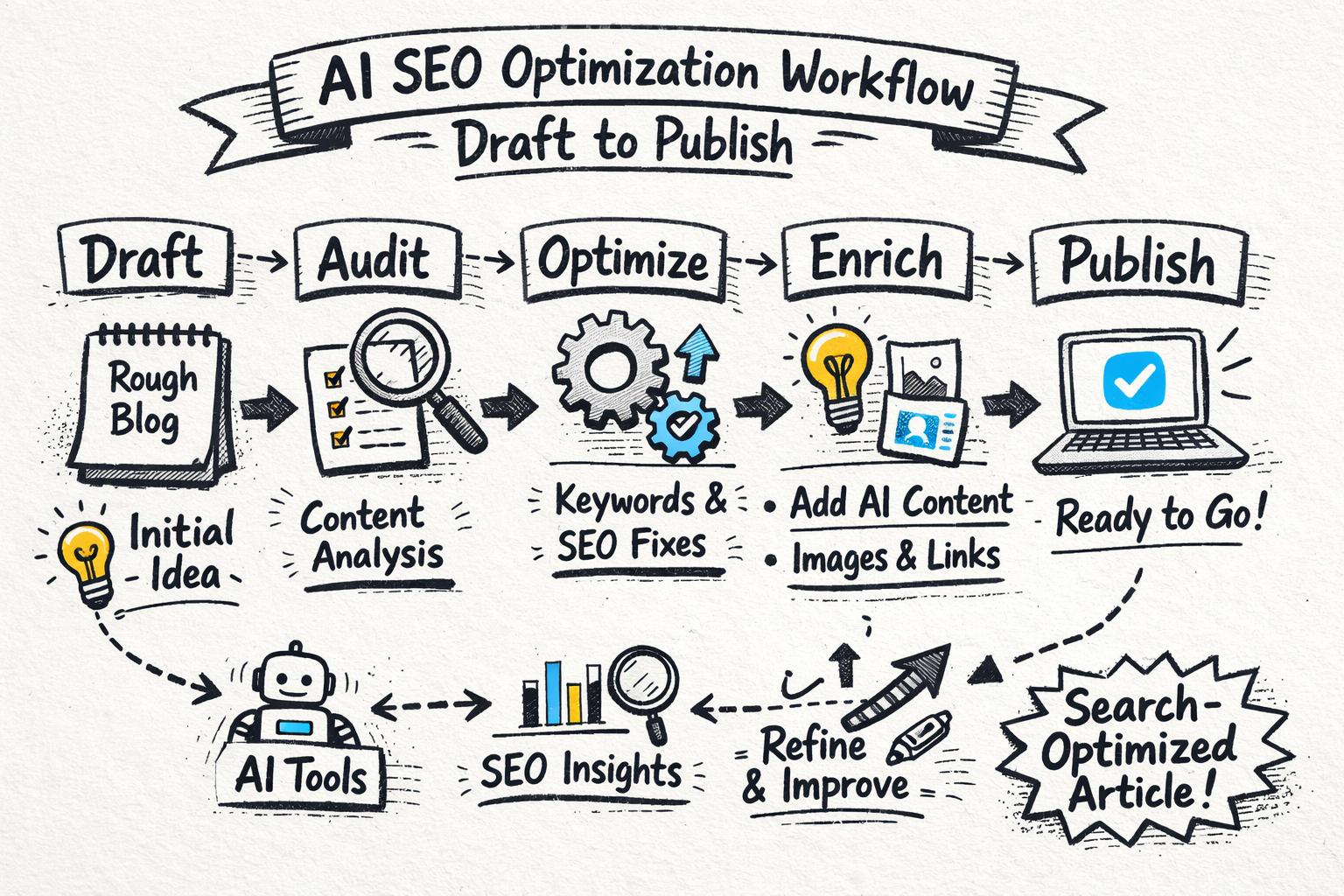
Here’s the full workflow we’ll cover:
Research & intent check
Structure & outline alignment
On-page SEO optimization (titles, headings, metadata, etc.)
Depth, E-E-A-T, and content enrichment
Publish, measure, and iterate
You can run this process manually or inside an AI blogging platform like Supablog that combines drafting, SEO content optimization, publishing, and analytics in one place.
Before you optimize anything, confirm that your draft actually answers what searchers want for the target keyword.
Start by locking in:
Primary keyword (e.g., “ai seo optimization”)
2–5 secondary keywords (e.g., “optimize blog posts for seo”, “on-page seo optimization”, “ai seo tool workflow”)
If you’re using a platform with built-in keyword research, like Supablog, this step can be automated. Otherwise, use tools like Google Keyword Planner, Ahrefs, or Semrush to validate search volume and difficulty.
For a deeper strategy on keyword selection and planning, see our AI blog content calendar template.
Open an incognito window and Google your primary keyword. Look at:
Top 5 ranking pages: Are they tutorials, tools, checklists, or definitions?
Search features: People Also Ask, featured snippets, videos, images
Common subtopics: What sections do most ranking posts include?
Match your draft to the dominant intent. For “ai seo optimization”, the dominant intent is typically informational + practical tutorial, not a sales page for a tool.
Google’s own documentation on creating helpful, reliable content is a useful reference here.
Scan your draft and ask:
Does it clearly define the topic in the first 2–3 paragraphs?
Does it show a process or steps (for tutorial intent)?
Does it address the same subtopics that appear across top-ranking pages?
Note missing sections or questions. You’ll fix them in the next phases.
Now you’ll make your draft structurally competitive with what’s already ranking.
Create an outline that:
Covers the main user journey from problem → solution → next steps
Includes the recurring subtopics from SERP competitors
Adds 1–2 unique angles (e.g., real examples, workflows, checklists)
You can ask an AI assistant to propose an outline based on the top results, then refine it manually to avoid copying structure too closely and to add your own expertise.
Take your existing paragraphs and move them under the new headings. Delete obvious fluff and duplication.
If big sections are missing (like a clear “Step-by-step workflow” or “Common mistakes”), add placeholder headings and notes. You’ll fill them in later using AI-assisted drafting and your own experience.
Headings help both readers and search engines understand your content. Aim for:
One clear H1 (usually your title in the CMS)
Descriptive H2s for main sections (e.g., “Phase 1: Research & search intent check”)
Optional H3s for steps within each phase
Include your primary or secondary keywords in some headings where it feels natural, but don’t force it.
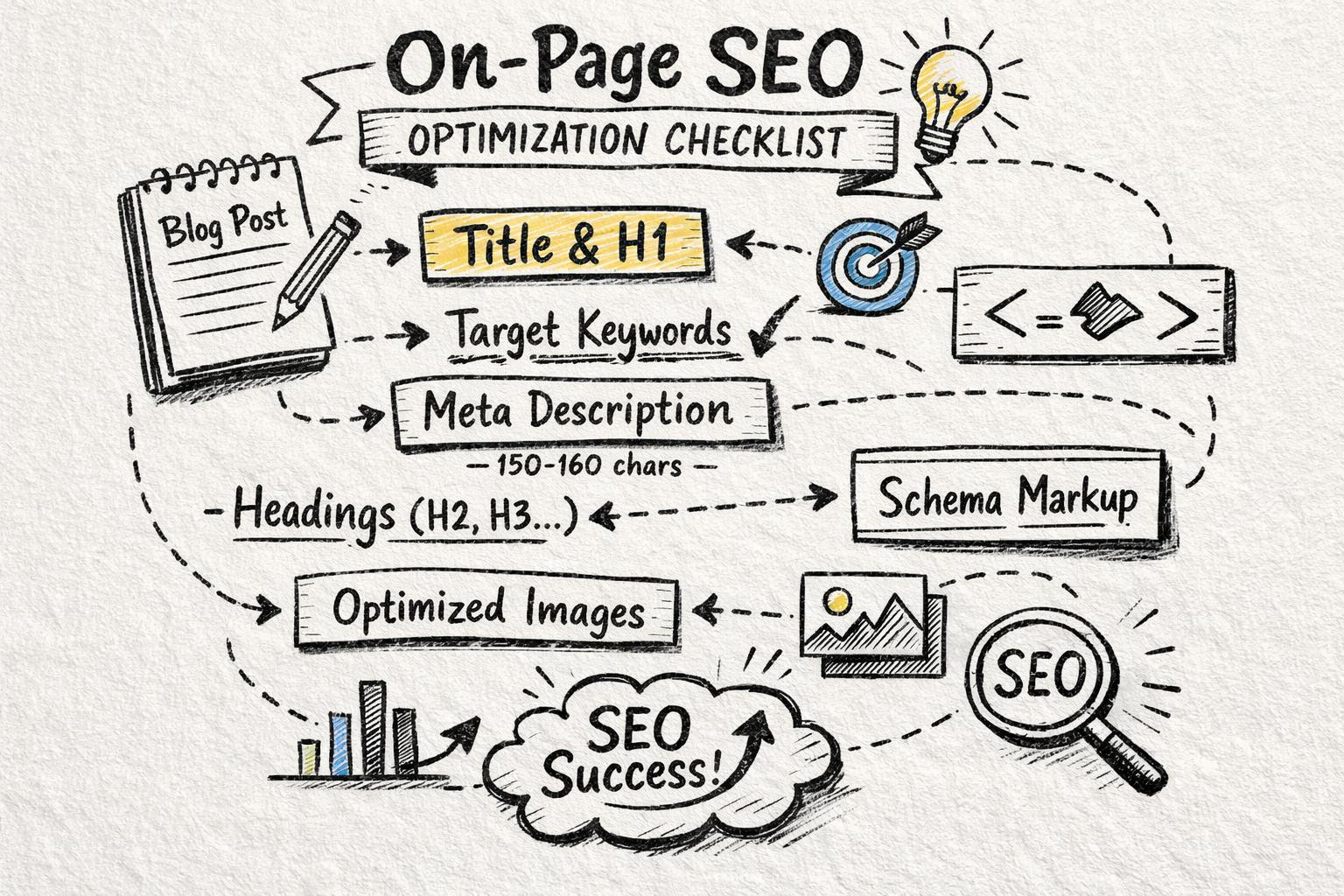
With structure in place, you can now systematically optimize blog posts for SEO. Here’s a practical checklist.
Your title should:
Include the primary keyword (e.g., “AI SEO Content Optimization”)
Signal the format (tutorial, checklist, guide, template)
Promise a clear outcome (e.g., “Turn Drafts Into Rankable Posts”)
Use an AI tool to generate 5–10 variations, then pick the one that best balances clarity, keyword usage, and click-worthiness.
Meta tags don’t directly boost rankings much, but they heavily influence CTR, which does. Aim for:
Meta title: 50–60 characters, primary keyword near the front
Meta description: 120–155 characters, benefit-focused, includes primary or secondary keyword
Example for this topic:
Meta title: AI SEO Optimization Tutorial: Turn Drafts Into Rankable Posts
Meta description: Learn a repeatable AI SEO workflow to transform any draft into a search-optimized article that ranks and drives leads.Keep URLs short, readable, and keyword-focused. For example:
Good: /ai-seo-optimization-tutorial
Poor: /2025/02/blog-article-1234
Most CMSs let you edit the slug directly. Avoid changing URLs after publishing unless you set up proper redirects.
Your first 2–3 paragraphs should:
Mirror the reader’s problem or goal
Use the primary keyword naturally
State what they’ll get from the article
Set expectations for depth and format (e.g., “5-phase workflow”)
You can use AI to rewrite intros until they clearly match intent and read naturally.
Instead of chasing density, focus on coverage and clarity:
Use the primary keyword in the intro, one H2 if natural, and once near the conclusion
Sprinkle secondary keywords where they make sense in context
Include semantic variations and related phrases
Modern search algorithms like BERT focus on understanding language and intent, so readability and usefulness matter more than exact-match repetition.
Internal links help distribute authority and guide readers deeper into your content. For this topic, you might link to:
A detailed SEO content brief template for AI writers when you discuss planning and outlines
An article on content workflow automation with AI tools when you cover scaling this process
An AI blog post checklist before you publish when you talk about final QA
For external links, reference a few authoritative resources such as:
Google’s guidance on AI-generated content
Well-known SEO studies or documentation when citing data or best practices
Images support both UX and SEO. For each image:
Use descriptive alt text that explains the image and, where natural, includes a related keyword
Compress images to keep page speed fast
Use relevant diagrams, workflows, or screenshots rather than generic stock photos
If your platform includes AI image generation, use it to create custom visuals that explain your process (e.g., an AI SEO optimization workflow diagram).
Schema helps search engines better understand your content and can unlock rich results. For tutorials and how-tos, consider:
Article schema for all blog posts
HowTo schema for step-by-step guides
If you’re not technical, look for SEO plugins or platforms that generate schema automatically based on your article structure.
At this point, your on-page basics are covered. Now you need to make the article the most useful resource on the topic—this is what really improves blog rankings over time.
Google’s E-E-A-T framework rewards content that demonstrates real-world experience. Add:
Short case snippets (e.g., “We optimized 20 AI-generated posts and saw a 35% lift in organic traffic in 3 months”)
Concrete examples of prompts, workflows, or settings
Lessons learned from failed experiments or iterations
You can draft these from your own work or client projects, then use AI to polish the writing while keeping your unique insights.
Use AI to expand specific sections—not the whole article at once. For example:
“List common mistakes people make when optimizing AI-generated blog posts for SEO, then suggest how to fix each one.”
“Draft a step-by-step checklist for on-page SEO optimization of a tutorial-style article.”
Then edit aggressively for accuracy, brand voice, and depth. Run the final article through a pre-publish blog checklist to catch thin or repetitive sections.
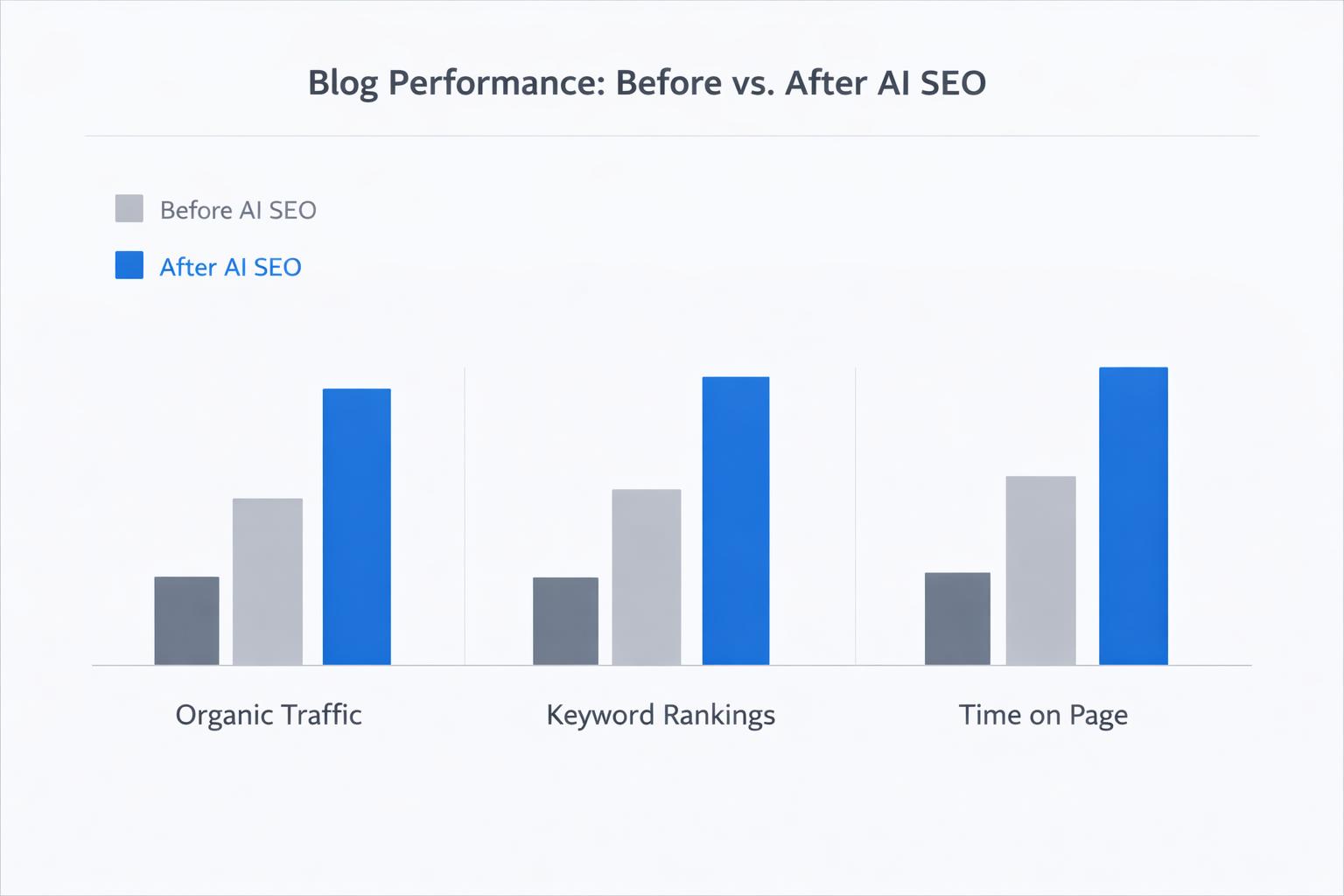
Strong articles often include simple frameworks or directional data instead of walls of text. For AI SEO optimization, you might show:
A before/after chart of rankings or organic traffic after optimization
A workflow diagram of your AI + human review process
A simple table comparing “raw AI output” vs “optimized article”
Readers (and Google’s crawlers) prefer content that’s easy to scan. Before publishing, ensure:
Paragraphs are short (2–4 sentences)
Lists are used for multi-step ideas or multiple items
Key phrases are highlighted with bold text sparingly
Headings clearly describe what follows
Tools like Hemingway or even your AI assistant can help simplify overly complex sentences while preserving meaning.
Optimization doesn’t stop at publish. To truly improve blog rankings, you need a feedback loop.
Set up tracking in Google Search Console and your analytics tool. Monitor:
Impressions & average position for your primary and secondary keywords
Organic traffic to the article
Click-through rate (CTR) from search results
Engagement: time on page, scroll depth, bounce rate
Our guide on measuring the ROI of AI content marketing dives deeper into tying these metrics to revenue.
Every 3–6 months, review your key articles and:
Update examples, screenshots, and data
Add new sections based on emerging questions or features
Improve internal linking from newer posts
AI can speed up refreshes by suggesting new subtopics, rewriting outdated sections, and checking for consistency across your content hub.
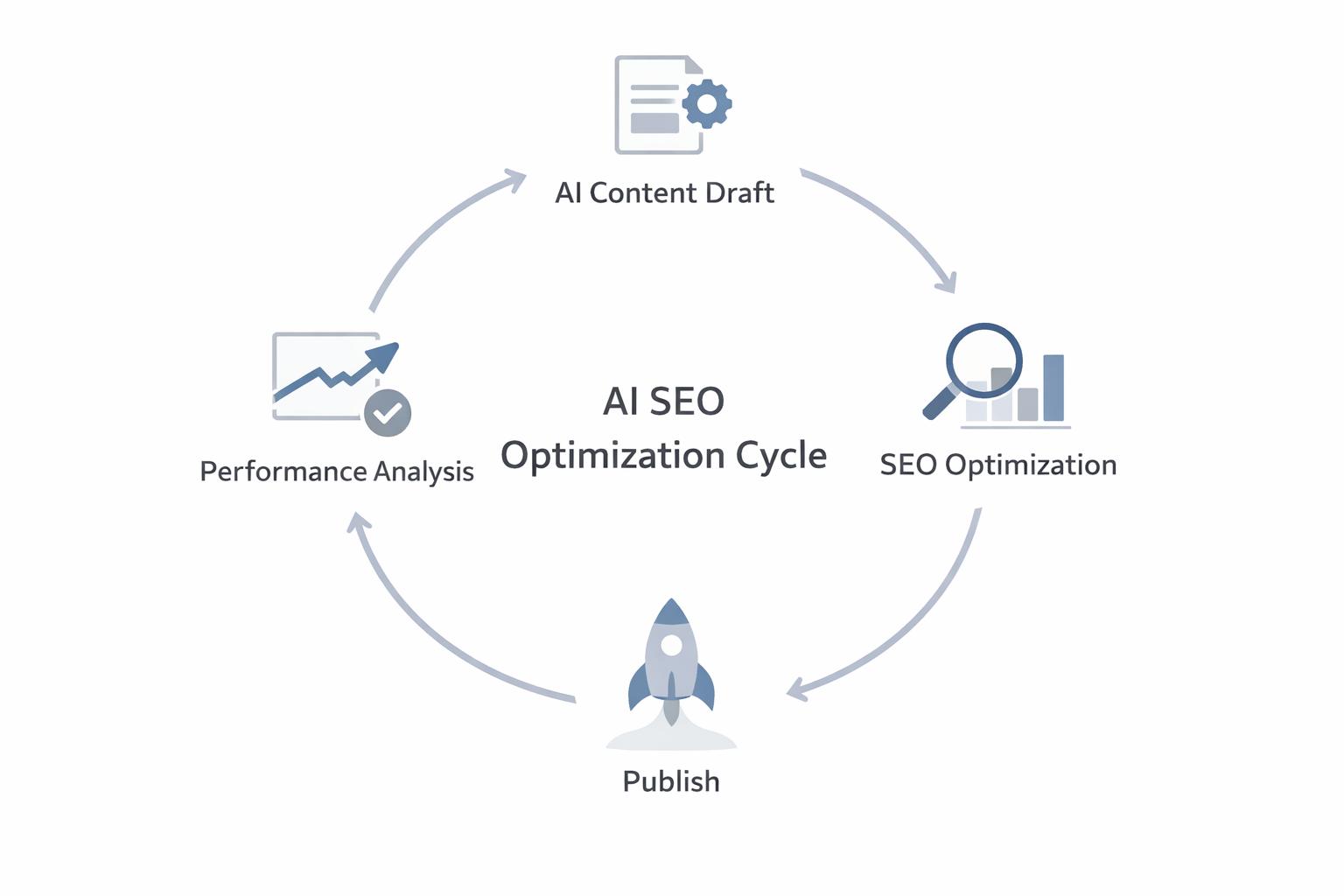
Here’s how this looks as a streamlined workflow using an AI-powered blogging platform like Supablog:
Generate or import a draft based on a keyword from your content calendar.
Run an SEO audit to identify missing headings, weak metadata, and keyword gaps.
Apply on-page SEO optimization suggestions automatically (titles, headings, links, images).
Enrich the article with AI-assisted expansions, examples, and visuals—then human-edit.
Publish to your CMS (WordPress, Webflow, Shopify, etc.) and track performance.
Review analytics monthly and queue underperforming posts for refresh.
When this workflow is combined with a solid strategy (see our complete guide to AI content marketing), you move from one-off article optimization to a scalable, compounding SEO engine.
As you apply this tutorial, watch out for these pitfalls:
Publishing raw AI drafts without human review, fact-checking, or E-E-A-T improvements
Over-optimizing keywords to the point where sentences sound unnatural
Ignoring search intent and turning informational queries into thin product pitches
Skipping measurement and never revisiting underperforming content
AI can write a draft in seconds, but only a deliberate optimization process turns that draft into an asset that ranks, converts, and compounds over time.
You now have a complete, repeatable process for turning any draft—human or AI—into a rankable, optimized article:
Phase 1: Confirm search intent and keyword focus
Phase 2: Align structure and headings with what ranks
Phase 3: Run through the on-page SEO checklist
Phase 4: Deepen content with examples, data, and E-E-A-T
Phase 5: Publish, measure, and iterate
If you want this workflow baked into your tooling, an AI blogging platform like Supablog can handle keyword discovery, drafting, AI SEO optimization, image generation, multi-platform publishing, and analytics in one place—so your team can focus on strategy and subject-matter expertise instead of manual SEO grunt work.
From here, build your own SOP using this tutorial, then pair it with the AI blog post checklist before you publish so every article you ship is fully optimized and ready to rank.
Written by
Pranjal JainFounder of Supablog, Pranjal is a software engineer passionate about building SaaS products that empower founders to grow and scale their businesses. With a strong focus on practical innovation, he creates tools that solve real-world challenges in the SaaS ecosystem. Outside of building and writing, he enjoys reading and traveling, drawing inspiration from new ideas, cultures, and experiences.